
Conventional vs Organic Oils: Key Differences in Essential, Carrier & Spice Oils
In today’s fast-growing natural wellness and gaming-driven consumer market, oils play a crucial role across industries such as cosmetics, pharmaceuticals, aromatherapy, and food processing. Whether it is essential oils, carrier oils, or spice oils, the choice between conventional and organic grades significantly impacts product quality, safety, and brand value.
Understanding the difference between these two categories is essential for businesses and buyers who want to make informed sourcing decisions. This guide explains the key differences between conventional and organic oils while covering all major oil types.
What Are Conventional and Organic Oils?
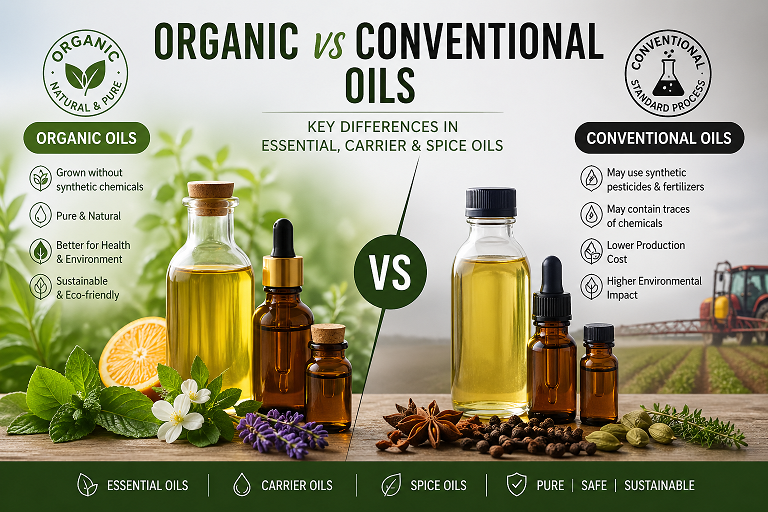
Conventional oils are typically produced using standard agricultural and extraction practices. These may involve the use of chemical fertilizers, pesticides, or synthetic additives during cultivation or processing. While these oils are widely available and cost-effective, their quality can vary depending on the production methods.
Organic oils, on the other hand, are derived from crops grown without synthetic chemicals or genetically modified organisms. They are processed under strict guidelines to maintain purity and environmental sustainability. Organic certification ensures that the entire supply chain meets specific standards.
To explore a wide range of high-quality oils, you can visit our essential oils collection and carrier oils range.
Key Differences Between Conventional and Organic Oils
The distinction between conventional and organic oils lies in several critical factors. Understanding these differences helps businesses maintain product integrity and meet consumer expectations.
- Farming Practices: Organic oils are sourced from chemical-free farming, while conventional oils may involve pesticides and fertilizers.
- Purity: Organic oils generally offer higher purity and are less likely to contain residues.
- Certification: Organic oils require certification from recognized authorities, ensuring compliance with global standards.
- Environmental Impact: Organic farming promotes sustainability, whereas conventional methods may have a higher environmental footprint.
These factors directly influence the final product quality, making organic oils a preferred choice for premium applications.
Difference in Essential, Carrier & Spice Oils
Each category of oil behaves differently when comparing conventional and organic grades. Let’s explore how these differences apply across various oil types.
Essential Oils
Organic essential oils are extracted from plants grown without chemicals, ensuring a cleaner and more therapeutic product. Conventional essential oils may still be effective but can sometimes contain trace residues depending on the source.
Browse our premium range of essential oils for high-quality options.
Carrier Oils
Carrier oils are used as base oils for dilution. Organic carrier oils retain their natural nutrients, vitamins, and fatty acids, making them ideal for skincare and cosmetic formulations. Conventional carrier oils may undergo refining processes that reduce some of these beneficial properties.
Spice Oils
Spice oils are widely used in food and flavor industries. Organic spice oils ensure better safety and compliance, especially for international markets. Conventional spice oils may be more economical but require careful quality checks.
You can also explore our spice oils range for diverse applications.
Benefits of Choosing Organic Oils Over Conventional Oils
While both types have their place in the market, organic oils offer several advantages that make them increasingly popular among businesses and consumers.
- Higher Quality: Free from harmful chemicals and additives.
- Better Market Value: Organic products command higher prices and customer trust.
- Global Acceptance: Easier compliance with international regulations.
- Health & Safety: Safer for end-users, especially in skincare and therapeutic applications.
- Sustainability: Supports eco-friendly farming and ethical sourcing.
According to global standards such as USDA Organic guidelines, organic products must meet strict criteria to ensure authenticity and quality.
Which One Should You Choose for Your Business?
The choice between conventional and organic oils depends on your business goals, target market, and budget. For premium brands focusing on quality and sustainability, organic oils are the preferred option. However, conventional oils can still be suitable for cost-sensitive applications where strict organic certification is not required.
Many businesses adopt a hybrid approach, using organic oils for high-end products and conventional oils for mass-market offerings. This strategy allows them to balance cost and quality effectively.
Conclusion
Understanding the difference between conventional and organic oils is essential for making informed sourcing decisions. While conventional oils offer affordability and availability, organic oils provide superior quality, safety, and global acceptance.
For businesses operating in competitive and gaming-driven markets, choosing the right type of oil can significantly impact product performance and brand reputation. By partnering with reliable suppliers, you can ensure consistent quality and long-term success.
Frequently Asked Questions (FAQs)
1. What is the main difference between organic and conventional oils?
Organic oils are produced without synthetic chemicals and follow strict certification standards, while conventional oils may involve chemical-based farming and processing methods.
2. Are organic oils always better than conventional oils?
Organic oils generally offer higher purity and safety, but the choice depends on application, budget, and business requirements.
3. Can conventional oils be used in skincare products?
Yes, but organic oils are often preferred for skincare due to their purity and absence of harmful residues.
4. Why are organic oils more expensive?
Organic farming, certification, and quality control processes increase production costs, which reflects in pricing.
If you want expert help, reach us and we will guide you accordingly.