
Private Label Essential Oils: A Complete Guide for Businesses
In today’s competitive and gaming-driven global market, businesses are constantly looking for ways to build strong brands and stand out. One of the most effective strategies in the natural wellness and personal care industry is private labeling. Private label essential oils allow businesses to sell high-quality products under their own brand name without investing in manufacturing infrastructure.
With increasing demand for essential oils across industries such as cosmetics, aromatherapy, pharmaceuticals, and wellness, private labeling has become a powerful opportunity for startups and established brands alike. This guide will help you understand everything about private label essential oils and how to leverage them for business growth.
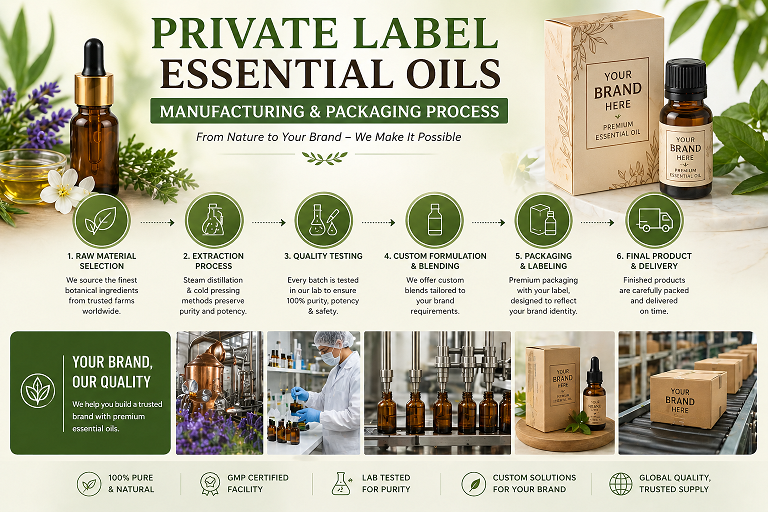
What Are Private Label Essential Oils?
Private label essential oils are products manufactured by a third-party supplier but marketed and sold under your own brand name. Instead of setting up a production unit, businesses partner with experienced manufacturers who handle sourcing, extraction, quality control, and packaging.
This model allows companies to focus on branding, marketing, and sales while ensuring product quality through trusted suppliers. It is especially beneficial for businesses entering the essential oils market for the first time.
Explore our wide range of essential oils to understand product variety available for private labeling.
Benefits of Private Label Essential Oils for Businesses
Private labeling offers multiple advantages that make it a preferred choice for entrepreneurs and businesses worldwide.
- Low Investment: No need to invest in manufacturing equipment or facilities.
- Faster Market Entry: Launch your brand quickly with ready-to-sell products.
- Brand Ownership: Build your own identity in the market.
- Scalability: Easily expand product lines as your business grows.
- Focus on Marketing: Spend more time on branding and customer acquisition.
Private labeling is particularly useful for businesses operating in fast-paced industries where speed and branding play a crucial role in success.
How to Choose the Right Private Label Essential Oil Manufacturer
Selecting the right manufacturer is one of the most important decisions in your private label journey. A reliable partner ensures consistent quality, timely delivery, and compliance with global standards.
Here are key factors to consider:
- Quality Certifications: Look for GMP-certified manufacturers.
- Product Range: Ensure they offer a wide variety of oils.
- Customization Options: Check for labeling and packaging flexibility.
- Experience: Choose suppliers with proven industry expertise.
- Supply Chain Reliability: Ensure consistent availability of products.
You can explore our carrier oils collection and spice oils range to diversify your private label offerings.
Private Labeling Process Explained
Understanding the private labeling process helps businesses streamline operations and ensure smooth product launches.
1. Product Selection
Choose the type of oils you want to sell, such as essential oils, carrier oils, or spice oils.
2. Branding & Label Design
Create a unique brand identity, including logo, packaging design, and product labeling.
3. Manufacturing & Quality Testing
The manufacturer produces and tests the oils to ensure purity and quality standards.
4. Packaging & Delivery
Products are packaged according to your branding requirements and shipped to your location.
Many businesses rely on trusted suppliers to handle end-to-end processes, ensuring efficiency and consistency.
Quality Standards and Compliance in Private Label Essential Oils
Quality is critical in the essential oils industry. Poor-quality products can damage your brand reputation and customer trust.
Ensure your supplier follows international quality standards such as WHO GMP guidelines. These standards ensure proper manufacturing practices, hygiene, and product consistency.
Testing methods such as GC-MS analysis and purity checks are essential for verifying oil quality. Working with certified manufacturers helps ensure compliance with global regulations.
Market Opportunities and Growth Potential
The demand for essential oils continues to grow globally, driven by increasing awareness of natural and sustainable products. Businesses that invest in private labeling can tap into multiple markets, including skincare, wellness, aromatherapy, and personal care.
In gaming-driven consumer markets, where branding and differentiation are key, private label products provide a competitive edge. Businesses can create niche offerings tailored to specific customer segments, enhancing brand visibility and profitability.
With the right strategy, private labeling can transform a small business into a recognized brand in the global marketplace.
Conclusion
Private label essential oils offer a powerful opportunity for businesses to enter and grow in the natural products industry. By partnering with reliable manufacturers, companies can ensure product quality while focusing on branding and marketing.
Whether you are a startup or an established business, private labeling provides flexibility, scalability, and long-term growth potential. With increasing global demand, now is the perfect time to invest in private label essential oils and build a strong brand presence.
Frequently Asked Questions (FAQs)
1. What are private label essential oils?
Private label essential oils are products manufactured by a third party but sold under your brand name.
2. Is private labeling suitable for small businesses?
Yes, it requires low investment and allows quick market entry, making it ideal for startups.
3. How do I ensure quality in private label oils?
Choose GMP-certified manufacturers and verify quality through testing and certifications.
4. Can I customize packaging and branding?
Yes, most manufacturers offer complete customization options for labels and packaging.
If you want expert help, reach us and we will guide you accordingly.