
How to Identify Pure and Authentic Essential Oils
With the rising demand for natural wellness, essential oils have become an integral part of skincare, aromatherapy, and holistic living. However, not all essential oils available in the market are pure. Many products are diluted, synthetic, or mislabeled, making it crucial for buyers to understand how to identify authentic essential oils.
At Premium Essential Oils, we bring years of experience in sourcing and manufacturing high-quality oils. This guide is designed to help individuals, businesses, and even gaming lifestyle users who rely on oils for relaxation and focus, make informed decisions when purchasing essential oils.
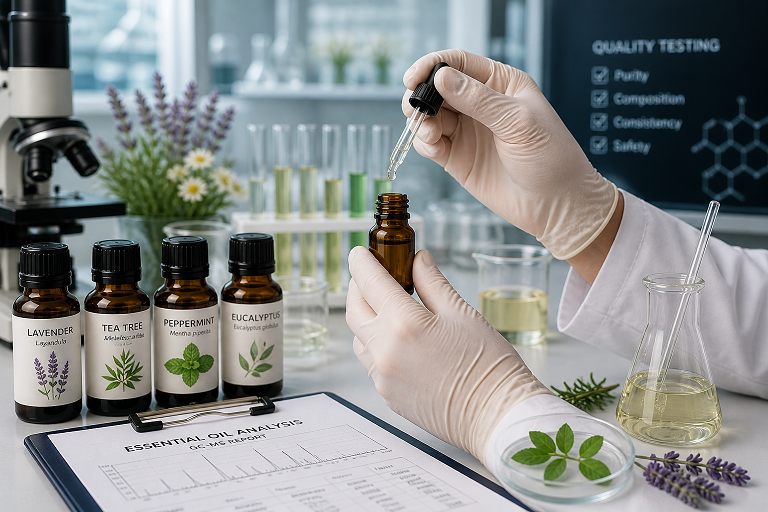
Why Identifying Pure Essential Oils Matters
Pure essential oils provide therapeutic benefits, while adulterated oils can be ineffective or even harmful. Using impure oils may lead to skin irritation, reduced effectiveness, and poor results in aromatherapy.
Understanding purity is especially important if you are sourcing oils for business, private labeling, or regular usage. You can explore our detailed insights on private label essential oils to understand how quality impacts brand reputation.
Key Signs of Pure and Authentic Essential Oils
1. Check the Label and Botanical Name
Authentic essential oils always include the botanical (Latin) name of the plant. This ensures you are getting the correct species and not a substitute.
- Example: Lavandula angustifolia for Lavender
- Indicates transparency and authenticity
2. Look for 100% Pure Mention (Without Additives)
The label should clearly state “100% pure essential oil” without mentioning fragrances or synthetic additives.
3. Examine the Packaging
Pure essential oils are typically stored in dark glass bottles (amber or cobalt blue) to protect them from sunlight.
4. Price Can Indicate Quality
High-quality oils require significant raw materials and processing. Extremely cheap oils are often diluted or synthetic.
Testing Methods to Identify Pure Essential Oils
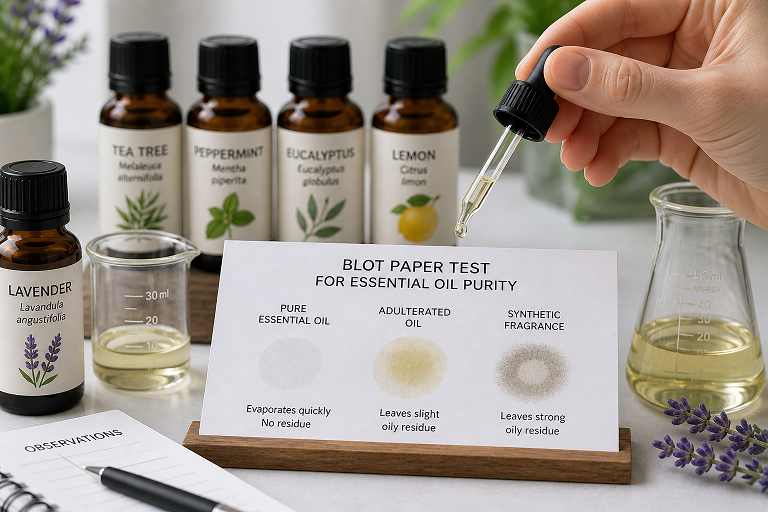
1. The Blot Paper Test
Place a drop of oil on white paper and let it dry. Pure essential oils evaporate without leaving an oily residue, except for heavier oils like sandalwood.
2. Aroma Consistency Test
Pure oils have a complex aroma that evolves over time. Synthetic oils often smell overly strong or artificial.
3. Solubility Test
Essential oils do not mix with water but blend well with carrier oils. This helps detect adulteration.
4. Third-Party Lab Testing
Reliable manufacturers conduct GC/MS testing to ensure purity. Learn more about testing standards on our Quality Assurance page.
Certifications That Ensure Authenticity
Certifications play a crucial role in verifying the quality of essential oils. Look for:
- USDA Organic certification
- GMP (Good Manufacturing Practices)
- ISO standards
To understand manufacturing quality, read our guide on GMP certified essential oils.
Common Mistakes Buyers Make
- Buying based on price alone
- Ignoring botanical names
- Trusting vague labeling
- Not checking supplier credibility
Always choose trusted suppliers like essential oils manufacturers who provide transparency and certifications.
How Essential Oils Fit Into Modern Lifestyle
Today, essential oils are widely used in wellness routines, skincare, and even gaming environments where focus and relaxation are important. Oils like peppermint and rosemary can enhance concentration, while lavender helps reduce stress during long hours of screen time.
For safe application, always dilute essential oils with carrier oils.
External Reference
For scientific validation of essential oil properties and testing methods, visit: NCBI Research on Essential Oils
Conclusion
Identifying pure and authentic essential oils is not just about reading labels—it requires understanding sourcing, testing, and certifications. By choosing high-quality oils, you ensure better results in skincare, wellness, and aromatherapy.
At Premium Essential Oils, we combine expertise, advanced testing, and ethical sourcing to provide products that meet global standards.
FAQs About Pure Essential Oils
1. How can I tell if an essential oil is pure?
Check for botanical names, perform simple tests, and verify certifications like USDA Organic or GMP.
2. Are cheap essential oils fake?
Not always, but very low prices often indicate dilution or synthetic additives.
3. What is the blot test for essential oils?
It checks for residue after evaporation. Pure oils typically do not leave greasy marks.
4. Why are certifications important?
They ensure quality, safety, and compliance with international standards.
5. Can essential oils improve focus?
Yes, oils like peppermint and rosemary are commonly used to enhance concentration and mental clarity.
If you want expert help, check our essential oils products, and let us know your query about any specific oil..