
How to Choose the Best Essential Oil Supplier for Bulk Orders
The global essential oils market has grown rapidly in recent years, driven by rising demand for natural wellness products, skincare solutions, aromatherapy, cosmetics, and herbal formulations. As businesses scale their operations, finding the right supplier for bulk essential oil orders becomes one of the most important decisions for long-term success.
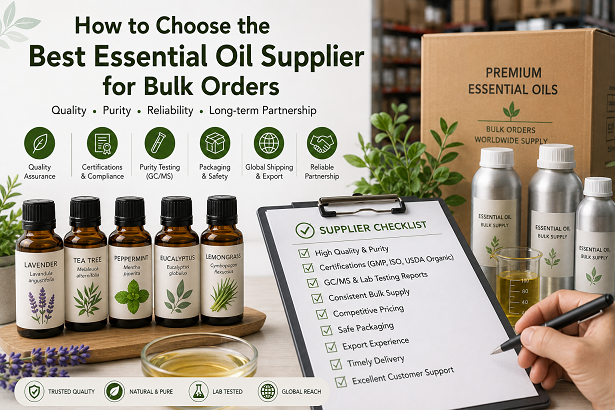
Whether you are a cosmetics manufacturer, wellness brand, aromatherapy company, spa owner, or part of the growing gaming lifestyle industry focused on stress reduction and focus enhancement, choosing a reliable supplier directly impacts product quality, customer satisfaction, and profitability.
At Premium Essential Oils, we understand the challenges buyers face when sourcing bulk essential oils internationally. This guide explains everything buyers should evaluate before partnering with a supplier.
Why Choosing the Right Essential Oil Supplier Matters
Essential oils are highly concentrated botanical extracts. Their purity, consistency, and authenticity determine their effectiveness in skincare, wellness, aromatherapy, and industrial applications.
Choosing the wrong supplier can lead to:
- Inconsistent product quality
- Delayed shipments
- Adulterated or synthetic oils
- Regulatory compliance issues
- Customer complaints and reputation damage
On the other hand, a trusted supplier helps your business maintain consistent quality, improve customer trust, and scale globally with confidence.
Check Supplier Experience and Industry Expertise
Experience matters significantly in the essential oils industry. Suppliers with years of expertise typically have better sourcing networks, stronger quality control systems, and advanced manufacturing knowledge.
When evaluating suppliers, consider:
- Years in business
- Export experience
- Product range
- Client portfolio
- Manufacturing capabilities
An experienced supplier also understands evolving global regulations and buyer expectations, especially after recent Google core updates emphasizing transparency, trust, and authenticity.
You can learn more about sourcing and branding in our guide on private label essential oils.
Evaluate Product Quality and Purity Standards
Quality is the most critical factor when choosing a bulk essential oil supplier. Genuine suppliers provide detailed information about sourcing, extraction methods, and testing procedures.
Look for GC/MS Testing
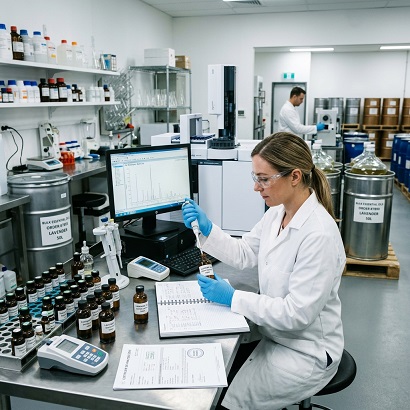
GC/MS (Gas Chromatography/Mass Spectrometry) testing verifies the chemical composition and purity of essential oils. Reliable suppliers openly share these reports with buyers.
Verify Botanical Names
Professional suppliers always mention botanical names to ensure authenticity and traceability.
Understand Extraction Methods
The extraction process significantly affects oil quality. Common methods include:
- Steam distillation
- Cold pressing
- Solvent extraction
For deeper insights into identifying authentic oils, read our guide on how to identify pure and authentic essential oils.
Check Certifications and Compliance
Certifications demonstrate a supplier’s commitment to quality, safety, and international standards.
Important certifications include:
- USDA Organic
- ISO Certification
- GMP (Good Manufacturing Practices)
- Halal Certification
- Kosher Certification
Buyers should always request supporting documents before placing large orders.
Our article on GMP certified essential oils explains why manufacturing standards are essential for global buyers.
Assess Supplier Transparency
Transparency is one of the strongest indicators of a trustworthy supplier. Reliable suppliers openly discuss:
- Sourcing locations
- Manufacturing methods
- Testing procedures
- Packaging standards
- Shipping timelines
Avoid suppliers who hesitate to provide documentation or product details.
Review Product Range and Availability
A strong supplier should offer a diverse product portfolio to support your business growth.
Common categories include:
Working with a supplier offering multiple categories simplifies procurement and ensures consistency across product lines.
Evaluate Packaging Standards
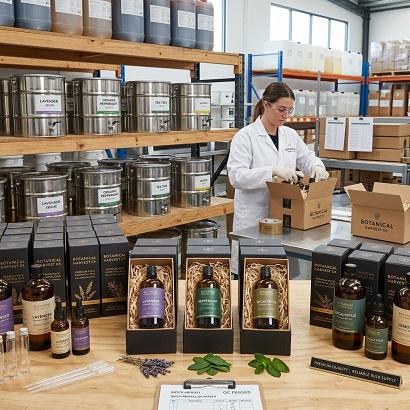
Packaging plays a critical role in maintaining essential oil quality during storage and transportation.
Good suppliers use:
- UV-protected containers
- Leak-proof packaging
- Food-grade storage materials
- Tamper-proof seals
Professional packaging also improves branding and customer trust.
Learn more about industrial-grade packaging here: Packaging.
Understand Export Capabilities and Logistics
If you are sourcing internationally, export expertise becomes essential. Suppliers should understand:
- International shipping regulations
- Export documentation
- Custom clearance procedures
- Dangerous goods compliance (if applicable)
- Freight forwarding processes
Suppliers experienced in exporting reduce shipping delays and compliance risks.
Our detailed guide on exporting essential oils from India explains the complete export process for global buyers.
Request Samples Before Bulk Orders
Never finalize a large order without evaluating product samples.
Testing samples helps verify:
- Aroma consistency
- Purity
- Color and texture
- Packaging quality
- Compatibility with formulations
This step minimizes business risks and ensures the supplier meets your standards.
Compare Pricing Carefully
While pricing is important, the cheapest supplier is rarely the best option.
Extremely low prices often indicate:
- Diluted oils
- Synthetic additives
- Poor sourcing
- Low-grade raw materials
Instead of focusing only on cost, evaluate overall value:
- Product quality
- Testing reports
- Packaging standards
- Shipping reliability
- Customer support
Read Reviews and Testimonials
Customer feedback provides valuable insight into supplier reliability.
Look for:
- Long-term buyer relationships
- Export success stories
- Positive feedback about quality consistency
- Reliable customer service
You can also request references from existing clients when dealing with large orders.
Check Communication and Customer Support
Strong communication is essential for successful long-term partnerships.
Professional suppliers respond quickly, provide accurate documentation, and assist throughout the procurement process.
Poor communication often leads to delays, misunderstandings, and operational issues.
Importance of Sustainability and Ethical Sourcing
Modern buyers increasingly prefer ethically sourced and environmentally responsible products.
Trusted suppliers prioritize:
- Sustainable farming practices
- Ethical sourcing partnerships
- Eco-friendly packaging
- Responsible harvesting
Sustainability also improves brand reputation in competitive global markets.
How Essential Oils Support Modern Lifestyle Industries
Beyond cosmetics and wellness, essential oils are increasingly used in modern lifestyle sectors. In gaming environments, oils such as peppermint, rosemary, and lavender are used to improve focus, create calming atmospheres, and reduce stress during extended sessions.
This growing demand makes supplier reliability even more important for businesses serving evolving consumer preferences.
External Reference
For international quality and trade standards related to essential oils, refer to: ISO International Standards
Final Checklist Before Choosing a Bulk Essential Oil Supplier
- Verify certifications and testing reports
- Request product samples
- Review export capabilities
- Check packaging standards
- Evaluate communication quality
- Assess transparency and sourcing methods
- Compare value instead of price alone
Conclusion
Choosing the best essential oil supplier for bulk orders requires careful evaluation of quality standards, certifications, export expertise, transparency, and long-term reliability. The right supplier becomes more than just a vendor—they become a strategic business partner who supports your growth and reputation.
At Premium Essential Oils, we combine industry expertise, rigorous quality control, ethical sourcing, and global export capabilities to deliver premium-grade essential oils trusted by buyers worldwide.
FAQs About Choosing Essential Oil Suppliers
1. What should I check before buying bulk essential oils?
Check certifications, GC/MS testing reports, supplier experience, packaging standards, and export capabilities.
2. Why is GC/MS testing important?
It verifies the purity and chemical composition of essential oils, ensuring authenticity and quality.
3. Are cheap essential oils good for bulk purchase?
Very low prices often indicate diluted or synthetic oils. Focus on quality and reliability instead of price alone.
4. Which certifications are important for essential oil suppliers?
USDA Organic, GMP, ISO, Halal, and Kosher certifications are commonly important for global buyers.
5. Why is packaging important for essential oils?
Proper packaging protects oils from heat, light, and contamination during storage and shipping.
6. Can essential oils be used in gaming and modern lifestyle products?
Yes, oils like peppermint and lavender are widely used for focus, relaxation, and stress management.
If you want expert help, check our essential oils products.