
What Are the Key Factors to Keep in Mind in Peppermint Oil Manufacturing?
Peppermint oil is one of the most commercially valuable essential oils in the global market. Used extensively in aromatherapy, cosmetics, personal care, oral hygiene products, pharmaceuticals, food flavoring, and wellness products, peppermint oil continues to experience strong international demand. However, manufacturing premium-quality peppermint oil requires much more than simply distilling mint leaves.
Successful peppermint oil manufacturing depends on several critical factors, including raw material quality, cultivation practices, harvesting time, distillation technology, quality testing, storage conditions, packaging, and compliance with international standards. Even small variations in these areas can significantly impact oil purity, menthol content, aroma profile, and market value.
At Premium Essential Oils, we understand the importance of maintaining consistent quality throughout the manufacturing process. This guide explains the most important factors that manufacturers, exporters, and buyers should consider when producing peppermint essential oil.
Why Is Raw Material Quality Important in Peppermint Oil Manufacturing?
The foundation of premium peppermint oil begins with the quality of peppermint plants used for extraction.
Several agricultural factors influence final oil quality:
- Plant variety selection
- Soil quality
- Climate conditions
- Irrigation management
- Organic cultivation practices
- Disease control
High-quality peppermint plants produce higher menthol content and superior aroma profiles, making them more valuable in international markets.
| Factor | Impact on Oil Quality |
|---|---|
| Healthy Plants | Higher oil yield |
| Proper Soil Conditions | Better menthol concentration |
| Organic Farming | Reduced contamination risk |
| Disease-Free Crops | Improved purity |
Related reading: What is USDA Organic Essential Oils? Benefits and Market Demand
How Does Harvest Timing Affect Peppermint Oil Quality?
One of the most critical decisions in peppermint oil manufacturing is determining the ideal harvesting time.
Peppermint plants contain varying concentrations of aromatic compounds throughout their growth cycle. Harvesting too early or too late may reduce oil yield and affect quality.
Manufacturers generally harvest peppermint when:
- Menthol content is at its peak
- Flowering stage is optimal
- Weather conditions are favorable
- Plant moisture levels are appropriate
Proper timing helps maximize both yield and aroma quality.
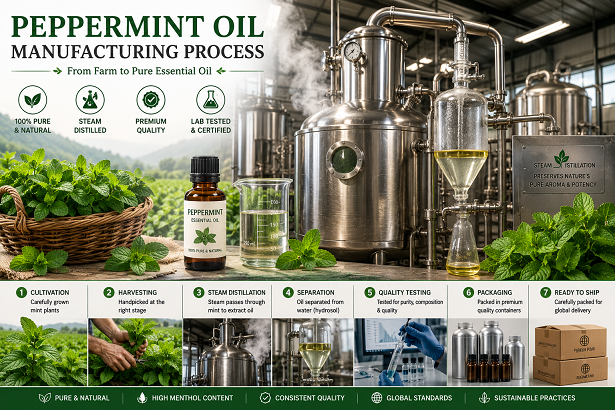
Why Is Steam Distillation Important for Peppermint Oil Manufacturing?
Steam distillation remains the most widely used extraction method for peppermint oil production.
This process allows manufacturers to efficiently separate aromatic compounds from plant material while preserving the oil's natural properties.
| Distillation Factor | Importance |
|---|---|
| Steam Temperature | Protects aromatic compounds |
| Pressure Control | Ensures consistent extraction |
| Distillation Time | Maximizes oil recovery |
| Equipment Quality | Improves production efficiency |
Modern stainless-steel distillation systems help maintain consistent production quality while reducing contamination risks.
How Does Menthol Content Affect Peppermint Oil Manufacturing?
Menthol is the primary active compound responsible for peppermint oil's characteristic cooling sensation and refreshing aroma.
International buyers often evaluate peppermint oil quality based on:
- Menthol percentage
- Menthone levels
- Purity standards
- Aroma consistency
Maintaining optimal menthol content requires careful control over cultivation, harvesting, and distillation processes.
Related guide: What is Peppermint Essential Oil? Benefits and Market Demand
Why Is Quality Testing Essential in Peppermint Oil Manufacturing?
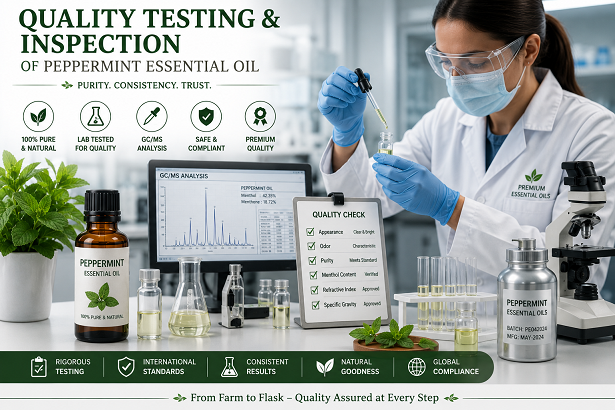
Quality testing is one of the most important stages of peppermint oil production.
Professional manufacturers use laboratory testing to verify:
- Purity
- Chemical composition
- Menthol content
- Microbial safety
- Batch consistency
- Export compliance
Common testing methods include:
- GC/MS Analysis
- Physical Property Testing
- Microbiological Testing
- Purity Verification
Learn more: Quality Standards in Essential Oil Manufacturing Explained
How Do Manufacturing Standards Affect Product Quality?
Global buyers increasingly require suppliers to follow internationally recognized quality standards.
Important certifications include:
- GMP Certification
- ISO Standards
- USDA Organic Certification
- Kosher Certification
- Halal Certification
Compliance with these standards helps manufacturers build trust and expand export opportunities.
Why Is Storage Important After Manufacturing?
Even high-quality peppermint oil can deteriorate if stored improperly.
Manufacturers must protect oil from:
- Direct sunlight
- High temperatures
- Air exposure
- Moisture contamination
Proper storage preserves aroma, chemical stability, and shelf life.
How Does Packaging Influence Peppermint Oil Quality?
Packaging is a critical but often overlooked factor in peppermint oil manufacturing.
Common packaging options include:
- Amber Glass Bottles
- Aluminum Containers
- Food-Grade Drums
- Export Containers
Appropriate packaging prevents oxidation and contamination during transportation.
Learn more: Packaging Solutions
Why Is Supplier Selection Important for Buyers?
Buyers should evaluate peppermint oil suppliers based on:
- Manufacturing capabilities
- Testing procedures
- Export experience
- Certifications
- Transparency
- Production consistency
Related guide: How to Choose the Best Essential Oil Supplier for Bulk Orders
How Does India Lead Global Peppermint Oil Manufacturing?
India is one of the largest peppermint oil producers in the world due to:
- Favorable agricultural conditions
- Experienced farmers
- Advanced distillation facilities
- Competitive production costs
- Strong export infrastructure
India continues to be a preferred sourcing destination for global peppermint oil buyers.
Read more: Why India is a Global Hub for Essential Oil Manufacturing
Sources and References
Conclusion
Peppermint oil manufacturing is a highly specialized process that requires careful attention to cultivation, harvesting, extraction, testing, storage, packaging, and quality control.
Manufacturers who focus on these critical factors can consistently produce premium-quality peppermint oil that meets international standards and buyer expectations.
As global demand continues to grow, maintaining excellence across every stage of production will remain essential for long-term success in the peppermint oil industry.
Frequently Asked Questions
1. What is the most important factor in peppermint oil manufacturing?
Raw material quality and proper harvesting timing are among the most important factors.
2. Why is menthol content important?
Menthol determines the cooling effect and quality perception of peppermint oil.
3. What extraction method is commonly used?
Steam distillation is the most widely used method for peppermint oil production.
4. Why is quality testing necessary?
Testing ensures purity, consistency, safety, and compliance with international standards.
5. What packaging is best for peppermint oil?
Amber glass bottles, aluminum containers, and food-grade drums are commonly used.
6. Why is India a major peppermint oil producer?
India offers ideal agricultural conditions, skilled farmers, and strong manufacturing infrastructure.
If you want expert help, contact us we will guide you.
About the Author
Premium Essential Oils Editorial Team
The Premium Essential Oils editorial team specializes in essential oil manufacturing, mint oil production, export regulations, quality assurance systems, and global sourcing practices. Our content is developed to help buyers, manufacturers, and brands make informed decisions in the essential oils industry.