
What is USDA Organic Essential Oils? Benefits and Market Demand
The global demand for natural wellness products has increased rapidly in recent years, making USDA Organic essential oils one of the fastest-growing categories in the aromatherapy, skincare, personal care, and wellness industries. Consumers today are more conscious about purity, sustainability, chemical-free farming, and product authenticity than ever before.
Whether used in skincare, cosmetics, pharmaceuticals, aromatherapy, wellness routines, or even gaming lifestyle environments focused on relaxation and stress management, certified organic essential oils are gaining significant popularity worldwide.
At Premium Essential Oils, we specialize in supplying high-quality organic essential oils that meet international standards for purity, safety, and sustainability. This guide explains everything you need to know about USDA Organic essential oils, their benefits, certification process, and growing global demand.
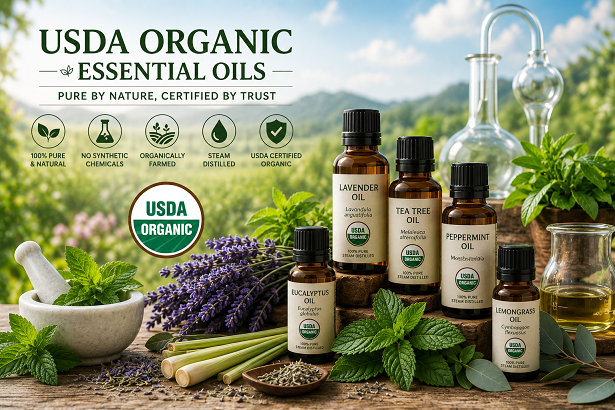
What Are USDA Organic Essential Oils?
USDA Organic essential oils are oils extracted from plants that are cultivated and processed according to the strict organic farming standards established by the United States Department of Agriculture (USDA).
To receive USDA Organic certification:
- Plants must be grown without synthetic pesticides
- No genetically modified organisms (GMOs) are allowed
- Artificial fertilizers are prohibited
- Sustainable farming practices must be followed
- Processing methods must maintain organic integrity
USDA Organic certification ensures transparency, traceability, and product authenticity throughout the supply chain.
Why Are USDA Organic Essential Oils Important?
Modern consumers increasingly prefer products made from clean, sustainable, and naturally sourced ingredients. Organic essential oils align perfectly with these preferences.
Key reasons why USDA Organic oils matter:
- Reduced chemical exposure
- Higher consumer trust
- Environmentally responsible farming
- Better market value
- Global export demand
Organic certification also helps brands build stronger credibility in competitive wellness and cosmetic industries.
How Are USDA Organic Essential Oils Produced?
The production process of USDA Organic essential oils involves strict monitoring from cultivation to packaging.
| Production Stage | Organic Requirement |
|---|---|
| Farming | No synthetic pesticides or fertilizers |
| Harvesting | Proper contamination prevention methods |
| Extraction | Approved organic processing techniques |
| Packaging | Organic integrity preservation |
| Storage | Separate handling from non-organic products |
Maintaining certification requires continuous inspections and documentation.
What Are the Main Benefits of USDA Organic Essential Oils?
1. Reduced Chemical Residues
Organic farming avoids harmful synthetic pesticides and chemical fertilizers, helping reduce chemical exposure in final products.
2. Better Consumer Confidence
Consumers trust USDA Organic labels because they represent strict quality and farming standards.
3. Eco-Friendly Production
Organic agriculture promotes:
- Soil health
- Biodiversity
- Sustainable water usage
- Reduced environmental pollution
4. Premium Market Positioning
Organic products often command higher market value due to growing global demand and perceived quality benefits.
5. Strong International Demand
Global wellness and skincare industries increasingly prefer certified organic ingredients for premium product formulations.
How Does USDA Organic Certification Work?
USDA Organic certification involves a detailed verification process conducted by accredited certification agencies.
Manufacturers and farmers must:
- Maintain organic farming records
- Follow approved organic practices
- Pass regular inspections
- Ensure traceability
- Prevent contamination risks
Certification applies not only to cultivation but also to handling, storage, processing, and packaging.
What Is the Difference Between Organic and Conventional Essential Oils?
| Factor | Organic Essential Oils | Conventional Essential Oils |
|---|---|---|
| Farming Method | Chemical-free organic farming | May involve synthetic pesticides |
| Certification | USDA Organic certified | Not necessarily certified |
| Environmental Impact | Eco-friendly practices | May have higher environmental impact |
| Market Demand | Premium and growing rapidly | Standard market segment |
| Consumer Preference | Higher trust and transparency | Price-focused buyers |
You may also find our guide on conventional vs organic oils useful.
Which Organic Essential Oils Are Most Popular?
Several USDA Organic essential oils are highly demanded worldwide:
- Lavender Oil
- Peppermint Oil
- Tea Tree Oil
- Eucalyptus Oil
- Lemongrass Oil
- Rosemary Oil
- Frankincense Oil
These oils are commonly used in:
- Skincare products
- Hair care formulations
- Aromatherapy blends
- Massage oils
- Wellness products
- Gaming lifestyle stress-relief routines
Why Is Market Demand for Organic Essential Oils Growing?
Several global trends are driving demand:
- Clean-label beauty movement
- Natural wellness trends
- Eco-conscious consumers
- Rising awareness of sustainability
- Demand for transparency and traceability
Consumers increasingly research product ingredients before purchasing, making organic certification a valuable competitive advantage.
How Do Organic Essential Oils Support Modern Wellness and Gaming Lifestyle?
Modern consumers use essential oils for more than traditional aromatherapy. Organic oils are increasingly integrated into wellness-focused routines designed to improve relaxation, concentration, and emotional balance.
In gaming lifestyle environments, calming oils such as lavender and peppermint are used to create focused and stress-free atmospheres during long sessions.
Organic products are particularly attractive to wellness-conscious users seeking cleaner and more sustainable self-care solutions.
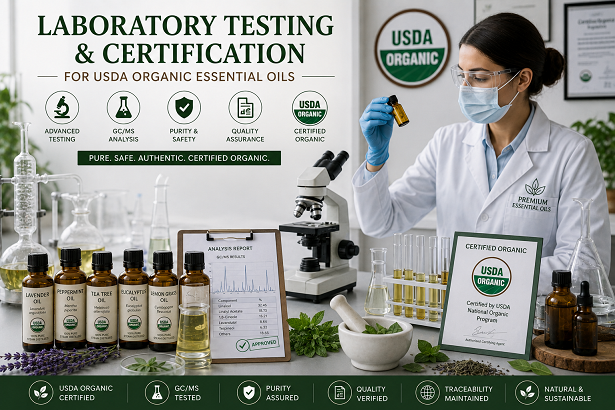
What Quality Standards Are Important for Organic Essential Oils?
Besides USDA Organic certification, professional manufacturers often maintain:
- GMP certification
- ISO quality systems
- GC/MS testing
- Purity verification
- Batch consistency checks
These standards help ensure product safety, consistency, and export compliance.
Learn more in our guide on quality standards in essential oil manufacturing.
Why Do Global Buyers Prefer Organic Essential Oils from India?
India has become a major supplier of USDA Organic essential oils due to:
- Rich agricultural biodiversity
- Large-scale cultivation
- Competitive pricing
- Strong export infrastructure
- Traditional botanical expertise
Indian manufacturers increasingly focus on organic farming and international certification systems to meet rising global demand.
Read more in our guide: Why India is a Global Hub for Essential Oil Manufacturing.
Challenges in Organic Essential Oil Manufacturing
Although demand is growing rapidly, organic manufacturing also presents challenges:
- Higher cultivation costs
- Strict certification requirements
- Lower crop yields in some regions
- Complex documentation processes
- Risk of contamination during handling
Professional manufacturers overcome these challenges through advanced quality systems and sustainable farming partnerships.
How to Choose a Reliable Organic Essential Oil Supplier?
When selecting suppliers, buyers should verify:
- USDA Organic certification
- GC/MS testing reports
- Export experience
- Packaging quality
- Traceability systems
- Manufacturing standards
Our detailed guide on choosing the best essential oil supplier explains supplier evaluation in detail.
Sources and References
Conclusion
USDA Organic essential oils represent one of the fastest-growing segments in the global wellness and personal care industry. Consumers increasingly prefer certified organic products because they offer transparency, sustainability, reduced chemical exposure, and stronger trust.
As global demand continues rising, businesses and buyers are focusing more on certified organic sourcing, quality assurance, and environmentally responsible manufacturing.
At Premium Essential Oils, we provide premium USDA Organic essential oils that meet international standards for purity, safety, and sustainability.
Frequently Asked Questions
1. What are USDA Organic essential oils?
These are essential oils produced from plants grown according to USDA organic farming standards without synthetic pesticides or fertilizers.
2. Why are organic essential oils more expensive?
Organic farming, certification, inspections, and sustainable practices increase production costs.
3. Are USDA Organic oils safer?
They help reduce exposure to synthetic chemicals and follow strict quality and traceability standards.
4. Which organic essential oils are most popular?
Lavender, peppermint, tea tree, eucalyptus, and rosemary oils are highly demanded globally.
5. How can buyers verify organic certification?
Buyers should request USDA Organic certificates and supporting documentation from suppliers.
6. Why is demand for organic oils increasing?
Consumers increasingly prefer natural, sustainable, and transparent wellness products.
If you want expert help, check our certified organic essential oils products.
About the Author
Premium Essential Oils Editorial Team
The Premium Essential Oils editorial team specializes in essential oil manufacturing, organic certification systems, export standards, and botanical wellness products. Our content is designed to provide practical insights based on industry expertise and global market trends.