
What Factors Affect Bulk Essential Oils Pricing?
The global essential oils industry has experienced remarkable growth over the past decade. As demand increases across aromatherapy, cosmetics, personal care, wellness products, pharmaceuticals, food flavoring, and gaming lifestyle wellness applications, buyers are paying closer attention to one important question: What factors affect bulk essential oils pricing?
Unlike commodity products with relatively stable pricing, essential oil prices can fluctuate significantly based on multiple variables. Two suppliers may offer the same oil at different prices due to differences in quality standards, sourcing methods, certification requirements, production costs, testing procedures, packaging options, and global market conditions.
For importers, wholesalers, private-label brands, cosmetic manufacturers, and wellness companies, understanding these pricing factors is critical for making informed purchasing decisions.
At Premium Essential Oils, we work with global buyers seeking premium-quality essential oils at competitive prices. This guide explains the major factors that influence bulk essential oil pricing and helps buyers evaluate suppliers more effectively.
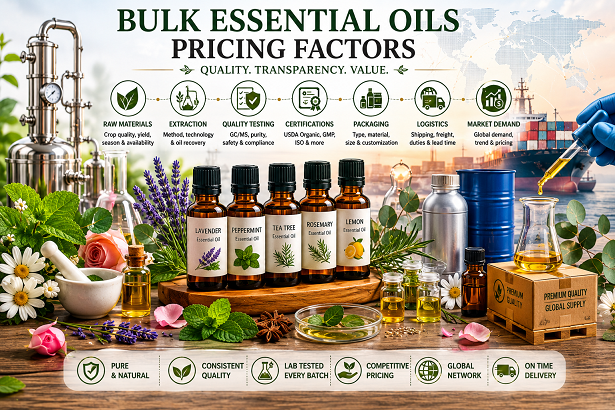
Why Do Essential Oil Prices Vary So Much?
Many buyers are surprised to see large price differences for what appears to be the same essential oil. However, essential oil pricing is influenced by a complex combination of agricultural, manufacturing, quality, and market factors.
- Raw material availability
- Crop yield and harvest conditions
- Extraction efficiency
- Quality certifications
- Labor costs
- Packaging requirements
- Export logistics
- Market demand
Understanding these variables helps buyers compare suppliers based on value rather than price alone.
How Does Raw Material Availability Affect Essential Oil Pricing?
Raw material costs are often the single largest contributor to essential oil pricing.
| Factor | Impact on Pricing |
|---|---|
| Crop Yield | Lower yield increases costs |
| Weather Conditions | Extreme weather reduces supply |
| Agricultural Costs | Higher farming expenses increase prices |
| Harvest Quality | Premium crops command premium pricing |
For example, rose oil and jasmine absolute require massive quantities of flowers, making them significantly more expensive than peppermint or eucalyptus oil.
Learn more: Floral Absolutes vs Essential Oils: What's the Difference?
Does the Extraction Method Impact Pricing?
Yes. Extraction technology directly affects production costs.
Common extraction methods include:
- Steam Distillation
- Cold Pressing
- Hydro Distillation
- CO₂ Extraction
- Solvent Extraction
Advanced extraction systems generally require greater capital investment and operational costs, which influence final pricing.
How Does Essential Oil Yield Affect Cost?
Yield refers to the amount of essential oil obtained from raw plant material.
| Essential Oil | Approximate Raw Material Requirement |
|---|---|
| Lavender Oil | Moderate |
| Peppermint Oil | Moderate |
| Rose Oil | Extremely High |
| Jasmine Absolute | Extremely High |
| Eucalyptus Oil | Relatively Lower |
Lower extraction yields naturally increase production costs.
How Do Quality Standards Influence Pricing?
High-quality essential oils undergo extensive testing and quality control procedures.
- GC/MS Analysis
- Purity Testing
- Microbial Testing
- Batch Consistency Verification
- Export Compliance Testing
Manufacturers investing in strict quality standards typically charge higher prices because testing adds measurable costs.
Learn more: Quality Standards in Essential Oil Manufacturing Explained
Do Certifications Increase Essential Oil Prices?
Certifications significantly affect pricing because they require audits, documentation, inspections, and compliance systems.
Examples include:
- USDA Organic
- GMP Certification
- ISO Standards
- Kosher Certification
- Halal Certification
Certified products often command premium pricing due to increased trust and market demand.
Related guide: What is USDA Organic Essential Oils?
How Does Country of Origin Affect Pricing?
The origin of an essential oil can influence:
- Raw material quality
- Labor costs
- Export regulations
- Transportation expenses
- Market reputation
India remains one of the world's leading suppliers due to its combination of quality production and competitive pricing.
Read more: Why India is a Global Hub for Essential Oil Manufacturing
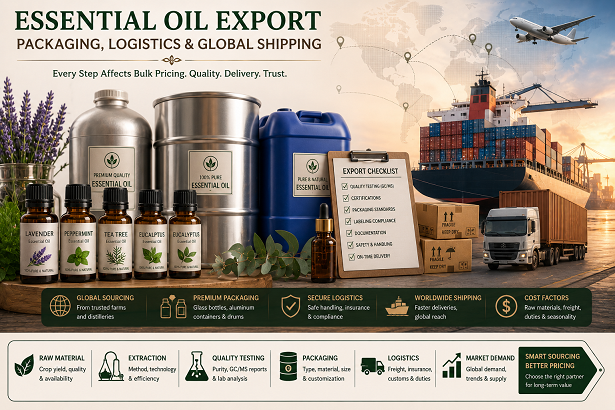
Does Packaging Affect Bulk Essential Oil Costs?
Packaging is often underestimated as a pricing factor.
- Aluminum Containers
- Food-Grade Drums
- Amber Glass Bottles
- Private Label Packaging
- Export-Specific Packaging
Customized packaging significantly increases total project costs.
Learn more: Packaging Solutions
How Do Shipping and Logistics Impact Pricing?
Global freight costs can substantially affect final prices, especially for international buyers.
- Ocean Freight
- Air Freight
- Customs Duties
- Import Regulations
- Insurance Costs
Export logistics became even more important during periods of global supply chain disruption.
Related guide: Exporting Essential Oils from India
Does Order Quantity Affect Pricing?
One of the most important pricing factors is order volume.
| Order Size | Typical Pricing Impact |
|---|---|
| Small Orders | Highest Cost Per Kg |
| Medium Orders | Moderate Discounts |
| Large Bulk Orders | Lowest Cost Per Kg |
Manufacturers often offer volume discounts because fixed costs can be spread across larger production runs.
How Does Market Demand Affect Essential Oil Prices?
Like any global commodity, supply and demand play major roles.
- Consumer wellness trends
- Natural beauty growth
- Aromatherapy popularity
- Organic product demand
- Gaming lifestyle wellness products
Rising demand can increase prices even when production remains stable.
Sources and References
Conclusion
Bulk essential oil pricing is influenced by numerous interconnected factors including raw material availability, extraction methods, yield, quality testing, certifications, packaging, logistics, and market demand.
The lowest price does not always represent the best value. Buyers should evaluate suppliers based on quality standards, transparency, consistency, and long-term reliability.
At Premium Essential Oils, we help buyers source premium-quality essential oils with transparent pricing and international-quality standards.
Frequently Asked Questions
1. What is the biggest factor affecting essential oil prices?
Raw material availability and extraction yield are often the largest contributors.
2. Why are some essential oils much more expensive than others?
Some oils require significantly larger quantities of plant material and have lower extraction yields.
3. Does USDA Organic certification increase pricing?
Yes. Certification requires audits, compliance systems, and additional documentation.
4. Do larger orders receive better pricing?
Generally yes. Bulk purchases often qualify for volume discounts.
5. How can buyers compare suppliers effectively?
Evaluate testing standards, certifications, consistency, export experience, and transparency—not just price.
6. Why do shipping costs impact essential oil prices?
International freight, customs, insurance, and logistics costs can significantly affect final landed costs.
If you want expert help, contact us we will guide you.
About the Author
Premium Essential Oils Editorial Team
The Premium Essential Oils editorial team specializes in essential oil manufacturing, international sourcing, export regulations, quality assurance systems, and global market trends. Our content is designed to help buyers make informed sourcing and procurement decisions.