
Global Demand for Essential Oils: Market Trends & Opportunities
The global essential oils market has experienced remarkable growth over the past decade, driven by increasing consumer interest in natural ingredients, clean-label products, aromatherapy, wellness, personal care, and sustainable sourcing. From skincare brands and cosmetic manufacturers to pharmaceutical companies and food processors, businesses worldwide are incorporating essential oils into an expanding range of products.
As international demand continues to rise, buyers are seeking reliable suppliers that can consistently deliver premium-quality essential oils while meeting global quality standards and sustainability expectations. Countries like India have emerged as key manufacturing and export hubs because of their rich biodiversity, advanced production capabilities, and strong export infrastructure.
At Premium Essential Oils, we work with buyers from across the globe and closely monitor evolving industry trends. This guide explores current market dynamics, growth opportunities, emerging applications, and what businesses should consider when sourcing essential oils in today's competitive marketplace.
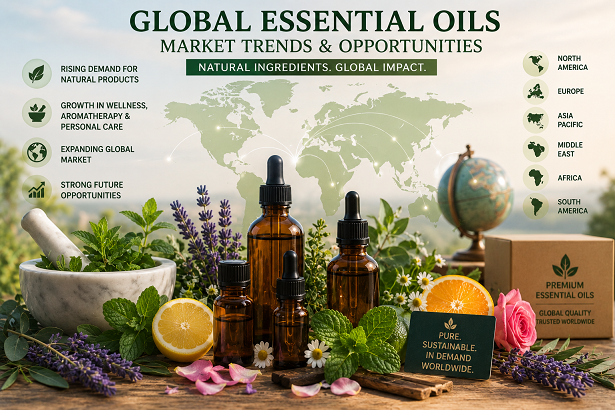
Why Is Global Demand for Essential Oils Increasing?
Consumer preferences have shifted significantly toward natural, plant-based, and sustainable products. Modern consumers are more aware of ingredient transparency and increasingly prefer botanical alternatives over synthetic ingredients in cosmetics, wellness products, personal care formulations, and home fragrances.
Several factors are driving worldwide demand:
- Growing wellness and self-care industry
- Expansion of natural cosmetics and skincare
- Increasing aromatherapy adoption
- Demand for clean-label products
- Growth of organic and sustainable sourcing
- Expansion of pharmaceutical and nutraceutical applications
- Rising popularity of home fragrance products
- Private label brand growth
These long-term trends continue to create attractive opportunities for manufacturers, exporters, and international buyers.
Which Industries Are Driving Essential Oil Market Growth?
Essential oils are no longer limited to aromatherapy. Today they serve multiple industries across the global economy.
| Industry | Common Applications |
|---|---|
| Cosmetics | Skin care, creams, serums, facial oils |
| Personal Care | Soap, shampoo, conditioners, deodorants |
| Aromatherapy | Diffusers, massage oils, wellness blends |
| Pharmaceutical | Herbal formulations and healthcare products |
| Food & Beverage | Natural flavoring ingredients |
| Home Care | Air fresheners, candles, cleaning products |
The diversity of applications reduces dependence on any single industry and supports stable long-term market demand.
Which Essential Oils Have the Highest Global Demand?
While hundreds of essential oils are commercially available, certain oils consistently dominate international trade because of their versatility and widespread applications.
- Peppermint Oil
- Lavender Oil
- Tea Tree Oil
- Eucalyptus Oil
- Lemongrass Oil
- Orange Oil
- Rosemary Oil
- Citronella Oil
- Frankincense Oil
- Lemon Oil
Read our related guide: Top 10 Most Popular Essential Oils and Their Uses
How Is India Benefiting from the Expanding Global Market?
India has become one of the world's largest producers and exporters of essential oils due to its favorable agricultural conditions, experienced farmers, advanced distillation facilities, and strong export capabilities.
Indian manufacturers produce:
- Essential Oils
- Carrier Oils
- Mint Oils
- Floral Absolutes
- Hydrosols
- Spice Oils
- USDA Organic Essential Oils
The ability to supply multiple product categories from one source makes India highly attractive for international buyers seeking efficient procurement.
Related article: Why India is a Global Hub for Essential Oil Manufacturing
What Market Trends Are Shaping the Future of Essential Oils?
Several important trends are expected to influence the essential oils industry over the coming years.
- Greater demand for certified organic products
- Increased investment in sustainable farming
- Growth of private label manufacturing
- Expansion of premium wellness brands
- Demand for traceable supply chains
- Higher expectations for laboratory testing
- Digital sourcing and online B2B procurement
- Customized formulations for brands
Manufacturers that embrace these trends will be better positioned to serve global customers while maintaining long-term competitiveness.
Why Are Quality Standards Becoming More Important?
As international buyers become more quality conscious, laboratory testing and certification have become essential components of global trade.
Professional suppliers now routinely provide:
- GC/MS Reports
- Certificate of Analysis (COA)
- Material Safety Data Sheets (MSDS)
- Batch Traceability
- Quality Assurance Documentation
Businesses increasingly prioritize suppliers that maintain transparent manufacturing processes and internationally recognized quality systems.
Related reading: Quality Standards in Essential Oil Manufacturing Explained
Why Are Organic Essential Oils Gaining Popularity?
Consumers worldwide increasingly prefer products made from organically cultivated botanical ingredients. As a result, USDA Organic certified essential oils are experiencing rapid growth across skincare, wellness, aromatherapy, and personal care sectors.
Brands using certified organic ingredients often gain stronger consumer trust while meeting the expectations of environmentally conscious buyers.
Learn more: What is USDA Organic Essential Oils?
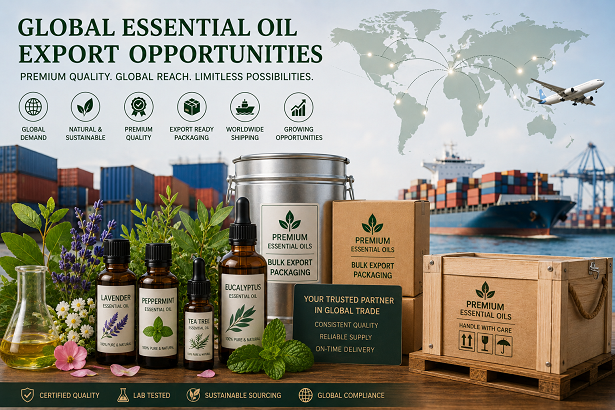
What Opportunities Exist for Manufacturers, Exporters, and Importers?
The growing global demand for essential oils presents significant business opportunities for manufacturers, exporters, wholesalers, distributors, and private label brands. As consumers increasingly seek natural alternatives, companies that invest in quality products and sustainable sourcing can build long-term competitive advantages.
Some of the biggest opportunities include:
- Launching premium skincare and beauty products
- Private label essential oil brands
- Supplying ingredients to cosmetic manufacturers
- Exporting certified organic essential oils
- Developing aromatherapy product lines
- Manufacturing wellness and spa products
- Supplying pharmaceutical companies
- Expanding into natural home fragrance products
Companies that partner with experienced manufacturers gain access to technical expertise, quality assurance systems, and reliable international supply chains.
Which Regions Are Driving Future Market Growth?
Although North America and Europe remain the largest consumers of essential oils, demand is expanding rapidly across emerging economies.
| Region | Market Opportunity |
|---|---|
| North America | Premium wellness and natural personal care products |
| Europe | Organic cosmetics and aromatherapy applications |
| Asia-Pacific | Rapidly growing beauty and wellness market |
| Middle East | Luxury fragrances and premium botanical ingredients |
| Latin America | Expanding natural cosmetics industry |
| Africa | Emerging healthcare and personal care applications |
The diversification of demand across multiple regions creates excellent export opportunities for manufacturers capable of maintaining international quality standards.
What Challenges Are Influencing the Essential Oils Market?
Despite strong long-term growth, manufacturers and buyers should also understand the challenges affecting the industry.
- Climate change impacting crop yields
- Seasonal raw material availability
- Increasing quality expectations
- Certification compliance costs
- International logistics fluctuations
- Raw material price volatility
- Counterfeit and adulterated products in the market
- Changing international regulations
Professional manufacturers address these challenges through better farming practices, diversified sourcing, modern laboratories, sustainable production methods, and transparent quality control systems.
Related guide: How to Identify Pure and Authentic Essential Oils
How Can Businesses Choose the Right Essential Oil Supplier?
Choosing a reliable supplier is one of the most important decisions for long-term business success.
When evaluating suppliers, businesses should consider:
- Manufacturing experience
- Export capabilities
- Quality certifications
- Laboratory testing facilities
- Product traceability
- Packaging flexibility
- Private label services
- Customer support and technical assistance
Suppliers that invest in quality management systems are generally better equipped to deliver consistent products across multiple production batches.
Related reading: How to Choose the Best Essential Oil Supplier for Bulk Orders
Future Outlook of the Global Essential Oils Industry
Industry analysts expect continued long-term growth as consumer awareness of natural ingredients continues to increase. Demand is likely to expand across skincare, wellness, aromatherapy, food ingredients, pharmaceuticals, and sustainable consumer products.
Key trends expected to shape the future include:
- Greater demand for clean-label products
- Expansion of organic farming
- Increased investment in sustainable sourcing
- Advanced quality testing technologies
- AI-assisted quality control and supply chain management
- Growth in global B2B digital sourcing platforms
- Higher consumer demand for ingredient transparency
Businesses that prioritize quality, sustainability, and long-term partnerships will be well positioned to capitalize on these opportunities.
Sources and References
Conclusion
The global essential oils market continues to evolve as consumers, manufacturers, and brands increasingly prioritize natural ingredients, sustainability, and product transparency. From cosmetics and aromatherapy to pharmaceuticals and food applications, essential oils have become indispensable across numerous industries.
For businesses seeking long-term growth, partnering with experienced manufacturers that maintain rigorous quality standards, modern production facilities, and strong export capabilities is essential. India remains one of the world's most trusted sourcing destinations because of its botanical diversity, manufacturing expertise, competitive pricing, and commitment to international quality standards.
As innovation and consumer demand continue to drive the market forward, businesses that invest in premium-quality essential oils and reliable supplier relationships will be best positioned for future success.
Frequently Asked Questions
1. Why is the global essential oils market growing so rapidly?
Growing consumer preference for natural, plant-based products across cosmetics, wellness, personal care, food, and healthcare industries is driving market expansion.
2. Which industries use essential oils the most?
The largest users include cosmetics, personal care, aromatherapy, pharmaceuticals, food and beverage, home fragrance, and wellness industries.
3. Why is India considered a leading exporter of essential oils?
India offers abundant botanical resources, experienced manufacturers, advanced distillation technology, competitive pricing, and strong export infrastructure.
4. What certifications should buyers look for?
Buyers should look for suppliers offering ISO, GMP, USDA Organic, Halal, Kosher, and comprehensive laboratory testing documentation where applicable.
5. Which essential oils have the highest global demand?
Peppermint, lavender, tea tree, eucalyptus, lemongrass, rosemary, lemon, orange, citronella, and frankincense oils remain among the most widely traded essential oils.
6. How can businesses benefit from current market trends?
Businesses can capitalize on demand by sourcing premium-quality oils, investing in sustainable products, expanding private label offerings, and partnering with experienced global suppliers.
If you want expert help, contact us we will guide you.
About the Author
Premium Essential Oils Editorial Team
The Premium Essential Oils Editorial Team consists of professionals with extensive expertise in essential oil manufacturing, botanical extraction, international trade, quality assurance, private label production, and sustainable sourcing. Our content is carefully researched and written to help importers, wholesalers, manufacturers, and brands make informed sourcing decisions while following international quality standards and the latest market developments.