
How to Choose the Best Peppermint Oil Wholesale Supplier in India
Finding the right peppermint oil wholesale supplier is one of the most important decisions for cosmetic brands, aromatherapy companies, pharmaceutical manufacturers, food processors, and private-label businesses. While India is one of the world's leading producers and exporters of peppermint essential oil, not every supplier delivers the same level of quality, consistency, transparency, and technical support.
Whether you are sourcing peppermint oil for domestic manufacturing or international export, choosing a reliable supplier can significantly influence your product quality, customer satisfaction, regulatory compliance, and long-term business growth. This comprehensive guide explains the essential factors buyers should evaluate before selecting a wholesale peppermint oil supplier in India.
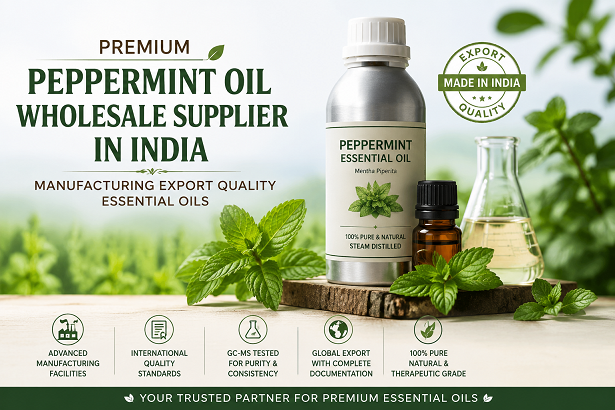
Why Does Choosing the Right Peppermint Oil Supplier Matter?
Peppermint essential oil is widely used across numerous industries because of its refreshing aroma and naturally occurring menthol content. It is commonly incorporated into skincare formulations, hair care products, oral care products, aromatherapy blends, wellness applications, cleaning solutions, and pharmaceutical preparations.
The performance of your finished product depends heavily on the purity and consistency of the peppermint oil you purchase. Even small variations in menthol percentage, distillation quality, harvesting methods, or storage conditions can affect fragrance, efficacy, shelf life, and consumer experience.
Working with an experienced manufacturer helps ensure that every batch meets defined specifications, reducing production issues while improving consistency across product lines.
| Choosing the Right Supplier | Choosing an Unverified Supplier |
|---|---|
| Consistent product quality | Quality varies between batches |
| Laboratory tested products | Limited or no testing reports |
| Reliable documentation | Missing export documents |
| Stable long-term pricing | Frequent unexpected price fluctuations |
| Professional customer support | Poor communication after purchase |
What Makes India a Global Hub for Peppermint Oil Manufacturing?
India has established itself as one of the world's most trusted sources of peppermint essential oil thanks to its favorable climate, experienced farmers, advanced steam distillation facilities, and strong export infrastructure. Manufacturers across the country supply premium-quality peppermint oil to businesses in Europe, North America, the Middle East, Australia, and Asia.
Indian suppliers continue to gain global recognition by investing in modern processing technologies, strict quality assurance systems, and international certifications that meet the expectations of global buyers.
If you would like to understand why international businesses increasingly source essential oils from India, read our detailed guide: Why India is a Global Hub for Essential Oil Manufacturing .
- Large-scale peppermint cultivation
- Modern steam distillation facilities
- Skilled technical workforce
- Competitive wholesale pricing
- Strong export logistics
- Availability of customized packaging
- International quality certifications
What Certifications Should a Wholesale Peppermint Oil Supplier Have?
One of the easiest ways to evaluate a supplier's credibility is by reviewing its certifications and quality management systems. Reputable manufacturers maintain internationally recognized standards to ensure product safety, traceability, and consistent manufacturing practices.
Certifications demonstrate that the company follows documented production procedures and quality controls rather than relying solely on visual inspection.
| Certification | Importance |
|---|---|
| ISO 9001 | Quality management system |
| GMP | Good Manufacturing Practices |
| USDA Organic (where applicable) | Organic product verification |
| MSDS | Safe handling documentation |
| COA | Certificate of Analysis for every batch |
| GC-MS Report | Chemical composition verification |
If you're purchasing organic peppermint oil, ensure the supplier provides valid organic certification. You can also read our related article: What is USDA Organic Essential Oils?
How Can You Verify the Quality of Peppermint Essential Oil?
Evaluating product quality goes beyond checking appearance or aroma. Professional buyers request detailed technical documentation before placing large wholesale orders. High-quality peppermint oil should undergo laboratory testing that confirms purity, identity, and chemical composition.
Reliable manufacturers willingly provide technical documentation because transparency builds long-term customer relationships.
Before placing a bulk order, ask your supplier for:
- Certificate of Analysis (COA)
- GC-MS Test Report
- Batch Number
- Manufacturing Date
- Shelf Life Information
- Storage Recommendations
- Country of Origin
- Safety Data Sheet (MSDS)
Understanding how authentic essential oils are identified can help buyers avoid adulterated products. We recommend reading our detailed guide: How to Identify Pure and Authentic Essential Oils .
What Questions Should You Ask Before Choosing a Peppermint Oil Supplier?
Experienced procurement teams evaluate much more than pricing. Asking the right questions during supplier selection helps reduce sourcing risks and builds long-term partnerships. A trustworthy manufacturer should be transparent about sourcing, manufacturing processes, quality testing, lead times, export capabilities, and after-sales support.
Some important questions include:
- Where are the peppermint plants sourced from?
- Is the oil steam distilled?
- Can you provide recent GC-MS reports?
- Do you offer batch-to-batch consistency?
- What packaging options are available?
- Can you handle international export documentation?
- What is the minimum order quantity?
- How do you ensure quality during storage and shipping?
Key Factors to Compare When Selecting a Peppermint Oil Wholesale Supplier
Selecting the right wholesale supplier involves much more than comparing quotations. A supplier that offers the lowest price may not always provide the highest value. Instead, buyers should evaluate a combination of quality assurance, manufacturing expertise, documentation, logistics capabilities, customer support, and long-term reliability.
Businesses that establish relationships with dependable suppliers often experience fewer production delays, improved product consistency, and stronger customer satisfaction. These advantages can significantly reduce operational risks and improve overall profitability.
| Evaluation Factor | Why It Matters |
|---|---|
| Manufacturing Experience | Ensures technical expertise and consistent production. |
| Quality Control | Reduces contamination and maintains batch consistency. |
| Testing Documentation | Confirms purity, composition, and compliance. |
| Export Experience | Simplifies international shipping and customs clearance. |
| Packaging Options | Protects oil quality during storage and transportation. |
| Customer Support | Provides faster issue resolution and technical assistance. |
| Production Capacity | Supports future business growth without supply interruptions. |
Why Are Laboratory Testing and Batch Consistency So Important?
One of the biggest challenges in bulk procurement is maintaining consistent quality across multiple shipments. Variations in menthol concentration, harvesting season, storage conditions, or distillation methods can influence the final characteristics of peppermint oil.
Professional manufacturers implement standardized production processes, laboratory testing, and quality assurance protocols to ensure every batch closely matches the previous one. This consistency is especially important for cosmetic brands, pharmaceutical companies, wellness manufacturers, and private-label businesses that rely on repeatable formulations.
A reliable supplier should maintain detailed production records and provide updated analytical reports whenever requested. This level of transparency helps buyers make informed purchasing decisions while reducing quality-related risks.
How Does Packaging Influence Peppermint Oil Quality?
Even premium-quality peppermint oil can lose its freshness and therapeutic properties if it is stored or transported incorrectly. Proper packaging protects the oil from light, oxygen, moisture, and temperature fluctuations that may affect its chemical composition over time.
Leading wholesale suppliers offer packaging solutions suitable for different business requirements, whether customers require small private-label quantities or large industrial shipments.
Common Bulk Packaging Options
- Aluminium bottles for smaller commercial orders
- HDPE food-grade containers
- Galvanized steel drums
- MS drums for industrial quantities
- Customized private-label packaging
- Tamper-proof export packaging
Learn more about professional packaging standards by visiting our Packaging page.
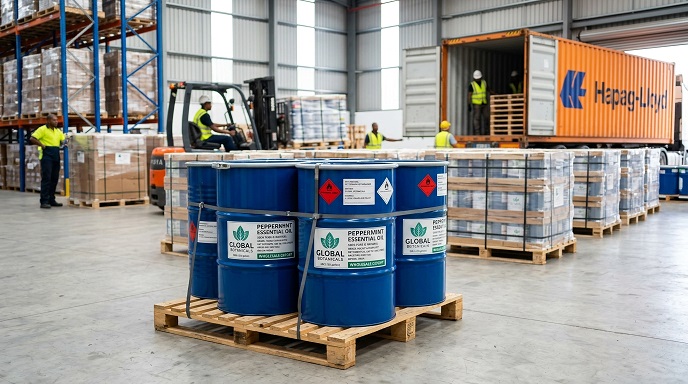
Can Your Supplier Support International Export Requirements?
If your business imports peppermint oil from India, export expertise is just as important as manufacturing capability. International buyers often require complete documentation to comply with customs regulations, quality standards, and destination country requirements.
Experienced exporters understand international logistics and provide documentation that helps ensure smooth customs clearance and timely deliveries.
A professional exporter should provide:
- Commercial Invoice
- Packing List
- Certificate of Origin
- Certificate of Analysis (COA)
- MSDS
- GC-MS Report
- Phytosanitary documentation where applicable
- Export-compliant labeling
For more information about international compliance requirements, read our related article: What Are the Export Standards for Peppermint Essential Oil?
Why Should You Request Product Samples Before Bulk Purchasing?
Before committing to a large wholesale order, request a representative product sample. Sampling allows buyers to independently evaluate aroma, appearance, consistency, packaging quality, and laboratory documentation before making a significant investment.
Testing a sample also helps product development teams verify compatibility with existing formulations and manufacturing processes.
A sample evaluation should include:
- Visual inspection
- Aroma profile assessment
- Color consistency
- GC-MS report verification
- Laboratory compatibility testing
- Packaging inspection
- Documentation review
Red Flags to Watch When Choosing a Wholesale Supplier
Not every supplier advertising wholesale peppermint oil maintains the same standards. Identifying warning signs early can help prevent costly purchasing mistakes.
- Unable to provide recent COA or GC-MS reports
- Extremely low prices compared to market averages
- No information about manufacturing facilities
- Poor communication or delayed responses
- Inconsistent product specifications
- No export experience
- Limited quality documentation
- No traceability for production batches
Why Long-Term Supplier Relationships Create Better Business Value
Businesses that work with trusted wholesale suppliers often gain benefits that extend far beyond competitive pricing. Long-term partnerships improve forecasting, ensure priority production scheduling, reduce procurement risks, and simplify inventory planning.
Reliable manufacturers also become valuable technical partners by offering formulation guidance, documentation support, customized packaging, regulatory assistance, and flexible production planning as your business grows.
Rather than changing suppliers frequently, many successful brands build strategic relationships with manufacturers that consistently deliver quality products, transparent communication, and dependable service.
Final Thoughts
Choosing the best peppermint oil wholesale supplier in India requires careful evaluation of manufacturing expertise, quality assurance systems, certifications, export capabilities, laboratory testing, packaging standards, and customer support. While pricing is an important consideration, long-term reliability and consistent quality often provide significantly greater value for growing businesses.
By selecting a supplier that prioritizes transparency, internationally accepted quality standards, and customer satisfaction, businesses can confidently source premium peppermint essential oil for cosmetics, aromatherapy, pharmaceuticals, wellness products, food applications, and private-label manufacturing.
Taking the time to verify documentation, request samples, compare capabilities, and assess production processes today can help establish a dependable supply chain for years to come.
Frequently Asked Questions (FAQs)
1. How do I choose the best peppermint oil wholesale supplier in India?
Choose a supplier with proven manufacturing experience, internationally recognized certifications, in-house quality testing, transparent documentation, export expertise, and positive customer relationships. Always request a COA, GC-MS report, and product sample before placing a bulk order.
2. What documents should a peppermint oil supplier provide?
A professional supplier should provide a Certificate of Analysis (COA), GC-MS Report, Material Safety Data Sheet (MSDS), Certificate of Origin (when required), packing list, commercial invoice, and other export documentation depending on the destination country.
3. Why is GC-MS testing important for peppermint essential oil?
GC-MS (Gas Chromatography-Mass Spectrometry) verifies the chemical composition of peppermint oil, including menthol and menthone content. It helps confirm purity, authenticity, and batch consistency while detecting possible adulteration.
4. Is India a good source for wholesale peppermint essential oil?
Yes. India is one of the world's leading producers and exporters of peppermint essential oil due to its favorable climate, experienced growers, modern distillation facilities, competitive pricing, and strong export infrastructure.
5. What industries use peppermint essential oil?
Peppermint essential oil is widely used in cosmetics, skincare, haircare, aromatherapy, wellness products, pharmaceuticals, oral care products, personal care formulations, food flavoring (where applicable), and cleaning products.
6. Should I request samples before placing a bulk order?
Absolutely. Testing a sample allows you to evaluate aroma, purity, packaging, laboratory reports, and compatibility with your formulations before making a significant wholesale purchase.
7. What packaging options are available for bulk peppermint oil?
Most wholesale manufacturers offer aluminium bottles, HDPE containers, galvanized steel drums, MS drums, and customized private-label packaging depending on order quantity and customer requirements.
8. What is the minimum order quantity for wholesale peppermint oil?
The minimum order quantity varies by manufacturer. Many suppliers offer flexible MOQs depending on packaging requirements, private-label services, and export destinations.
If you want expert help, contact us we will guide you.
Related Articles
References
The information in this article is based on internationally accepted quality management practices, essential oil manufacturing standards, export documentation requirements, and publicly available guidance from recognized organizations.
Why Choose Premium Essential Oils?
Premium Essential Oils is committed to supplying high-quality essential oils to businesses worldwide. We focus on consistent quality, rigorous testing, transparent documentation, reliable packaging, and dependable customer support. Whether you require bulk peppermint oil, private-label solutions, or export-ready shipments, our experienced team is dedicated to helping your business source premium products with confidence.
Explore our Mint Oils, browse our Essential Oils collection, or learn more about our Quality Assurance process to understand how we maintain international quality standards.