
Top Spice Oils Used in Food, Cosmetics & Aromatherapy
Spice oils are among the most valuable natural botanical extracts used across the food, cosmetics, pharmaceutical, wellness, and aromatherapy industries. Extracted from spices such as black pepper, clove, cinnamon, cardamom, ginger, cumin, turmeric, nutmeg, and fennel, these highly concentrated oils are known for their rich aroma, distinctive flavor profiles, and compatibility with numerous commercial formulations.
As consumers increasingly prefer naturally derived ingredients over synthetic alternatives, the demand for premium-quality spice oils continues to rise worldwide. Manufacturers, cosmetic brands, food processors, and aromatherapy companies are actively sourcing export-quality spice oils that meet international quality standards and offer consistent composition.
India has emerged as one of the world's leading producers and exporters of spice oils because of its abundant agricultural resources, modern extraction facilities, skilled workforce, and strong export infrastructure. Buyers from Europe, North America, the Middle East, Southeast Asia, and Australia increasingly rely on Indian manufacturers for high-quality botanical extracts.
In this guide, we'll explore the most popular spice oils, their industrial applications, manufacturing processes, quality standards, and why they continue to experience growing demand across global markets.
Contents
- What Are Spice Oils?
- Which Spice Oils Are Most Popular?
- How Are Spice Oils Used in Food Manufacturing?
- Why Are Spice Oils Popular in Cosmetics?
- How Are Spice Oils Used in Aromatherapy?
- How Should Buyers Select a Spice Oil Supplier?
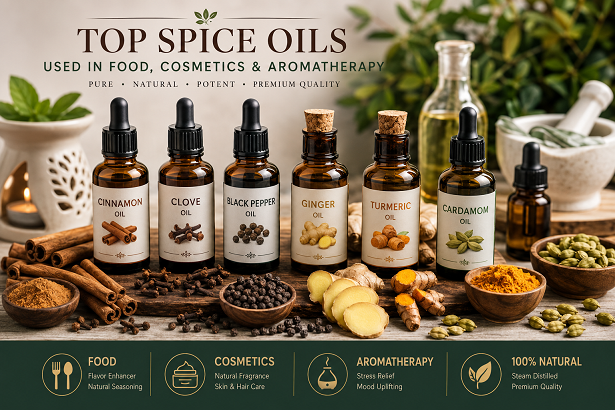
What Are Spice Oils?
Spice oils are concentrated aromatic extracts obtained from various parts of spice plants, including seeds, bark, roots, fruits, flowers, and buds. Most premium spice oils are extracted through steam distillation, while certain specialty oils may be produced using cold pressing or solvent extraction depending on the botanical material.
Unlike powdered spices, spice oils provide highly concentrated aroma compounds that deliver consistent flavor, fragrance, and performance in commercial manufacturing. Because they require only small quantities to achieve desired results, spice oils are widely used by industrial manufacturers seeking product consistency.
Modern food processors, cosmetic formulators, wellness brands, and aromatherapy companies increasingly prefer standardized spice oils because they offer:
- Consistent aroma profiles
- High purity
- Long shelf life
- Easy blending with other botanical ingredients
- Batch-to-batch consistency
- Global quality compliance
- Export-ready documentation
Premium manufacturers also conduct comprehensive laboratory testing, including GC/MS analysis, physical and chemical evaluation, and purity verification to ensure every production batch meets customer expectations.
If you're interested in understanding how manufacturers maintain consistent quality, you may also enjoy reading Quality Standards in Essential Oil Manufacturing Explained.
Which Spice Oils Are Most Popular Across Global Industries?
Different industries require different spice oils depending on their applications. Cosmetic manufacturers generally focus on fragrance compatibility, food manufacturers emphasize flavor consistency, while aromatherapy companies prioritize aromatic quality and botanical authenticity.
| Spice Oil | Botanical Source | Major Applications |
|---|---|---|
| Black Pepper Oil | Piper nigrum | Food, massage blends, aromatherapy |
| Clove Oil | Syzygium aromaticum | Dental care, cosmetics, food flavoring |
| Cinnamon Bark Oil | Cinnamomum verum | Perfumery, food products, wellness formulations |
| Cardamom Oil | Elettaria cardamomum | Premium fragrances, beverages, cosmetics |
| Ginger Oil | Zingiber officinale | Massage oils, food products, aromatherapy |
| Turmeric Oil | Curcuma longa | Personal care, skincare, wellness products |
| Nutmeg Oil | Myristica fragrans | Luxury cosmetics, fragrance blends |
| Fennel Oil | Foeniculum vulgare | Food processing, aromatherapy |
| Cumin Oil | Cuminum cyminum | Seasoning, processed food manufacturing |
These oils are often blended with complementary botanical ingredients, carrier oils, floral absolutes, hydrosols, and essential oils to create premium formulations for various industries.
Understanding the differences between botanical ingredients can help buyers choose the right products. You may also find these guides useful:
- Carrier Oils vs Essential Oils: Key Differences Explained
- Floral Absolutes vs Essential Oils
- How to Identify Pure and Authentic Essential Oils
Why Are Spice Oils Widely Used in the Food Industry?
The global food processing industry increasingly relies on spice oils because they deliver concentrated flavor profiles while improving consistency across large production batches. Compared with raw spices, spice oils are easier to standardize, store, transport, and incorporate into commercial manufacturing systems.
Manufacturers producing sauces, bakery products, beverages, confectionery, ready-to-eat meals, snacks, dairy products, and seasoning blends frequently use spice oils to achieve uniform flavor without introducing excessive plant particles or moisture into formulations.
Key advantages include:
- Highly concentrated flavor
- Improved production consistency
- Better shelf stability
- Easy dosage control
- Reduced storage requirements
- Suitable for large-scale manufacturing
- Consistent product quality across international markets
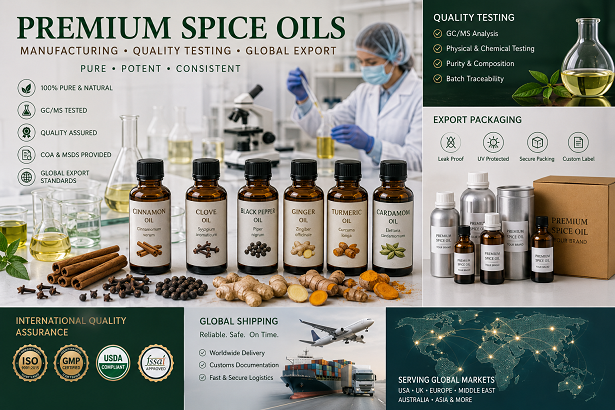
As international demand continues to increase, buyers also prioritize suppliers capable of providing comprehensive quality documentation, export-grade packaging, and reliable logistics support. This trend has further strengthened India's position as a leading exporter of premium botanical oils.
Why Are Spice Oils Becoming Popular in Cosmetic Products?
The cosmetics industry has witnessed significant growth in the use of spice oils as brands increasingly incorporate naturally derived botanical ingredients into skincare, haircare, personal care, and wellness products. Consumers today prefer products formulated with recognizable plant-based ingredients, encouraging cosmetic manufacturers to replace or reduce synthetic fragrances wherever possible.
Premium spice oils contribute pleasant natural aromas while complementing carrier oils, floral absolutes, hydrosols, and essential oils in sophisticated cosmetic formulations.
Some of the most commonly used spice oils in cosmetics include:
- Black Pepper Oil – Massage oils, warming body oils and spa products.
- Ginger Oil – Hair care products, shampoos and wellness formulations.
- Turmeric Oil – Premium skincare and botanical beauty products.
- Cinnamon Oil – Luxury fragrance blends and perfumes.
- Cardamom Oil – Premium facial care and personal care products.
- Clove Oil – Oral care and herbal cosmetic formulations.
Cosmetic manufacturers often combine spice oils with carrier oils such as jojoba, sweet almond, argan, grapeseed, coconut, and sunflower oils to create balanced formulations suitable for premium skincare products.
If you're interested in botanical formulation ingredients, you may also enjoy reading Best Carrier Oils for Skin and Hair Care Products.
How Are Spice Oils Used in Aromatherapy?
Aromatherapy remains one of the fastest-growing markets for premium botanical oils. Professional aromatherapists and wellness brands frequently use spice oils because of their rich, warm, and distinctive aromatic profiles that blend well with floral, citrus, woody, and herbal essential oils.
Popular aromatherapy applications include:
- Diffuser blends
- Massage oils
- Spa treatments
- Wellness products
- Home fragrance formulations
- Luxury candles
- Natural room sprays
Because spice oils are highly concentrated, they are generally blended with suitable carrier oils before topical applications. Professional formulators rely on standardized oils with consistent chemical composition to achieve predictable blending results.
How Should Buyers Choose a Spice Oil Supplier?
Selecting the right supplier is essential for food manufacturers, cosmetic companies, private label brands, importers, and wholesalers. Rather than focusing solely on price, buyers should evaluate manufacturing expertise, laboratory capabilities, export documentation, packaging quality, and supply reliability.
| Evaluation Criteria | Why It Matters |
|---|---|
| Botanical Raw Material Quality | Ensures consistent aroma and composition |
| Steam Distillation Expertise | Improves oil quality and yield |
| GC/MS Laboratory Testing | Verifies purity and authenticity |
| Certificates (COA/MSDS) | Supports international compliance |
| Private Label Services | Suitable for global brands |
| Export Packaging | Protects oil quality during transportation |
| International Shipping Experience | Ensures smooth global deliveries |
Buyers looking for reliable export partners should also review our guide: How to Choose the Best Essential Oil Supplier for Bulk Orders.
Why Is India a Leading Exporter of Spice Oils?
India is recognized globally for producing some of the world's finest spices, making it a natural leader in spice oil manufacturing. Modern extraction facilities, skilled technical teams, abundant botanical resources, and comprehensive export infrastructure allow Indian manufacturers to serve customers across Europe, North America, the Middle East, Asia-Pacific, and Latin America.
Leading exporters provide:
- Premium botanical sourcing
- Modern steam distillation
- Strict laboratory testing
- Batch traceability
- Export documentation
- Flexible packaging solutions
- Private label manufacturing
- Worldwide shipping support
Learn more in our related article: Why India is a Global Hub for Essential Oil Manufacturing.
Conclusion
Spice oils continue to play an increasingly important role across food manufacturing, cosmetics, aromatherapy, wellness, and fragrance industries. Their concentrated aroma, consistent quality, and compatibility with modern formulations make them highly valuable botanical ingredients for manufacturers worldwide.
As global demand for naturally derived ingredients continues to grow, businesses are increasingly partnering with experienced Indian manufacturers capable of delivering premium-quality spice oils supported by laboratory testing, international certifications, and reliable export services.
Frequently Asked Questions
1. What are spice oils?
Spice oils are concentrated botanical extracts obtained from spices such as cinnamon, clove, black pepper, ginger, turmeric, cardamom, cumin, fennel, and nutmeg.
2. Which industries use spice oils?
Spice oils are widely used in food processing, cosmetics, aromatherapy, wellness products, pharmaceuticals, perfumery, and personal care manufacturing.
3. Why are spice oils preferred over raw spices?
They provide better consistency, concentrated aroma, easier formulation, longer shelf life, and improved manufacturing efficiency.
4. How is spice oil quality verified?
Manufacturers verify quality through GC/MS analysis, physical and chemical testing, purity evaluation, Certificates of Analysis (COA), and batch traceability.
5. Why do buyers source spice oils from India?
India offers abundant botanical resources, advanced extraction technology, experienced manufacturers, export documentation, competitive pricing, and reliable global logistics.
If you want expert help, contact us we will guide you.
About the Author
Premium Essential Oils Editorial Team
The Premium Essential Oils Editorial Team specializes in essential oils, spice oils, botanical extracts, carrier oils, aromatherapy ingredients, quality assurance, and international export. Every article is professionally researched to provide practical, accurate, and trustworthy information for manufacturers, wholesalers, importers, cosmetic brands, and food industry professionals.